Filtered Out: How Committee Culture Silences the Insights That Could Change Everything
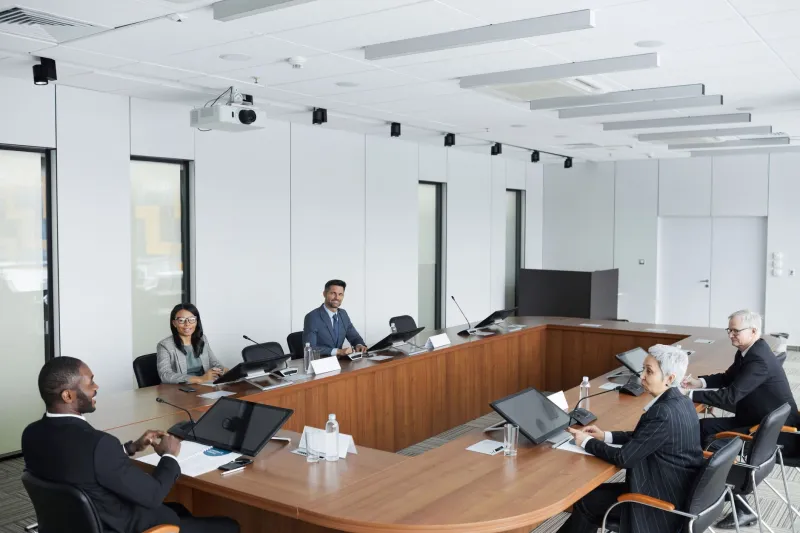
The Room Where Ideas Go to Die
There is a particular kind of organizational dysfunction that is almost impossible to detect from the top. It does not announce itself in failed projects or missed earnings. It operates silently, embedded in the very processes that executives have designed to improve decision-making. It is the systematic elimination of uncomfortable, unconventional, or contrarian thinking before it ever reaches the people with the authority to act on it.
Most leadership teams believe they are receiving the best available thinking from their organizations. In reality, they are receiving the best available thinking that survived the journey upward — a very different thing.
Committees, working groups, consensus-building sessions, and multi-stakeholder reviews are not inherently flawed. Collaboration, properly structured, genuinely improves outcomes. But in the absence of deliberate design, these same mechanisms function as filters, quietly stripping out the ideas that challenge prevailing assumptions and rewarding the perspectives that confirm what the group already believes.
Why Conformity Travels Faster Than Insight
The psychological literature on group dynamics has documented this pattern extensively, but the business implications remain underappreciated. When individuals participate in collaborative decision-making processes, they face a fundamental asymmetry: the personal cost of voicing a contrarian view is immediate and concrete, while the organizational benefit of that view is diffuse and uncertain.
An analyst who challenges the strategic direction of a business unit risks being perceived as obstructionist, politically naive, or simply difficult to work with. The same analyst who refines and supports the prevailing view is rewarded with social cohesion and professional goodwill. Over time, these incentives do not merely influence individual behavior — they reshape what people are willing to think out loud at all.
This is not a failure of individual courage. It is a predictable response to structural incentives. And it means that organizations actively invested in collaborative culture often experience the most severe versions of this problem, precisely because they have created so many opportunities for the filtering process to occur.
By the time a strategic recommendation reaches a senior leadership team, it may have passed through four, five, or six layers of review — each one applying its own informal pressure toward consensus. What arrives at the table is not the organization's best thinking. It is its most acceptable thinking.
The Structural Mechanics of Strategic Suppression
Several specific mechanisms accelerate this process in mid-market and enterprise organizations.
Pre-meeting alignment rituals. In many organizations, the substantive debate does not occur in formal meetings — it occurs in the hallway conversations, pre-calls, and preparatory sessions that precede them. By the time the committee convenes, positions have already been negotiated, and the meeting itself functions as ratification rather than deliberation. Novel ideas that did not survive the informal pre-process never appear on the agenda.
Seniority-weighted credibility. When working groups include participants of different organizational ranks, junior members routinely defer to the implicit preferences of senior ones — often before those preferences are even stated. A vice president's offhand skepticism about an unconventional approach can effectively end the discussion before it begins, regardless of the underlying merits.
The legibility premium. Ideas that are easy to explain, quantify, and compare to precedent move through organizational review processes more efficiently than ideas that require new frameworks to evaluate. This creates a structural disadvantage for genuinely novel strategic thinking, which by definition lacks the established reference points that make ideas legible to committees.
Risk attribution asymmetry. In most organizations, the downside of sponsoring a failed unconventional idea falls disproportionately on the individual who championed it, while the upside of a successful one is distributed broadly. This asymmetry systematically discourages the sponsorship of high-variance strategic proposals, even when the expected value strongly favors exploration.
Designing for Dissent Without Inviting Chaos
The answer is not to abandon collaborative decision-making. It is to architect it more deliberately, with explicit mechanisms that counteract the filtering dynamics described above.
Separate generation from evaluation. Organizations that conflate idea generation with idea assessment in the same session guarantee that evaluation norms will suppress generation. Structuring these as distinct phases — with different participants, different facilitation approaches, and different success criteria — allows unconventional ideas to be developed before they are subjected to the scrutiny that would otherwise eliminate them prematurely.
Formalize the contrarian role. Rather than relying on individuals to voluntarily assume the social cost of dissent, assign it structurally. A designated challenger function — whether a formal devil's advocate role, a red team process, or a pre-mortem exercise — distributes the social risk of skepticism and signals that contrarian input is expected rather than tolerated.
Create direct channels to senior leadership. If every strategic idea must pass through the same layered review process, the filtering problem is guaranteed. Organizations that create structured mechanisms for unconventional thinking to reach decision-makers directly — whether through anonymous input channels, skip-level strategy sessions, or dedicated innovation forums — preserve the possibility that something genuinely novel will survive the journey.
Audit what is not being discussed. Perhaps the most revealing diagnostic available to senior leaders is not an assessment of the quality of the ideas they are receiving, but an investigation into the ideas they are not receiving. Periodic structured inquiry into what proposals were deprioritized, modified significantly, or never advanced at all can surface the patterns of suppression that formal reporting processes will never reveal.
What Leadership Owes the Organization
Ultimately, the consensus trap is not a problem that can be solved at the committee level. It is a leadership problem, because the incentive structures that produce conformity are set — implicitly or explicitly — by the people at the top.
When senior leaders visibly reward the surfacing of uncomfortable ideas, even when those ideas are ultimately rejected, they alter the calculus for everyone below them. When they demonstrate genuine curiosity about what the organization is not telling them, they create the conditions under which honest strategic thinking can survive.
The organizations that consistently make better strategic decisions are not necessarily the ones with smarter people or better data. They are the ones that have built the structural conditions for their best thinking to actually reach the people who need to act on it.
That is not a cultural initiative. It is an engineering problem — and it deserves the same rigor that any other structural challenge in the business would receive.